Heating oil more than doubles in a year to 112p a litre as ministers promise regulation
A litre of heating oil costs more than twice what it did a year ago. The daily UK average from BoilerJuice is 112.34p before VAT this morning, against 52.98p on 14 October 2025, and the government's own monthly figure for September, 102.31p with VAT, is the third highest since its records began in 1989. On 13 October the government accepted the competition watchdog's call to regulate heating oil suppliers for the first time. It ruled out a price cap and set no date. Here is what a tank costs today, what changes and when, and the help open to households off the gas grid.
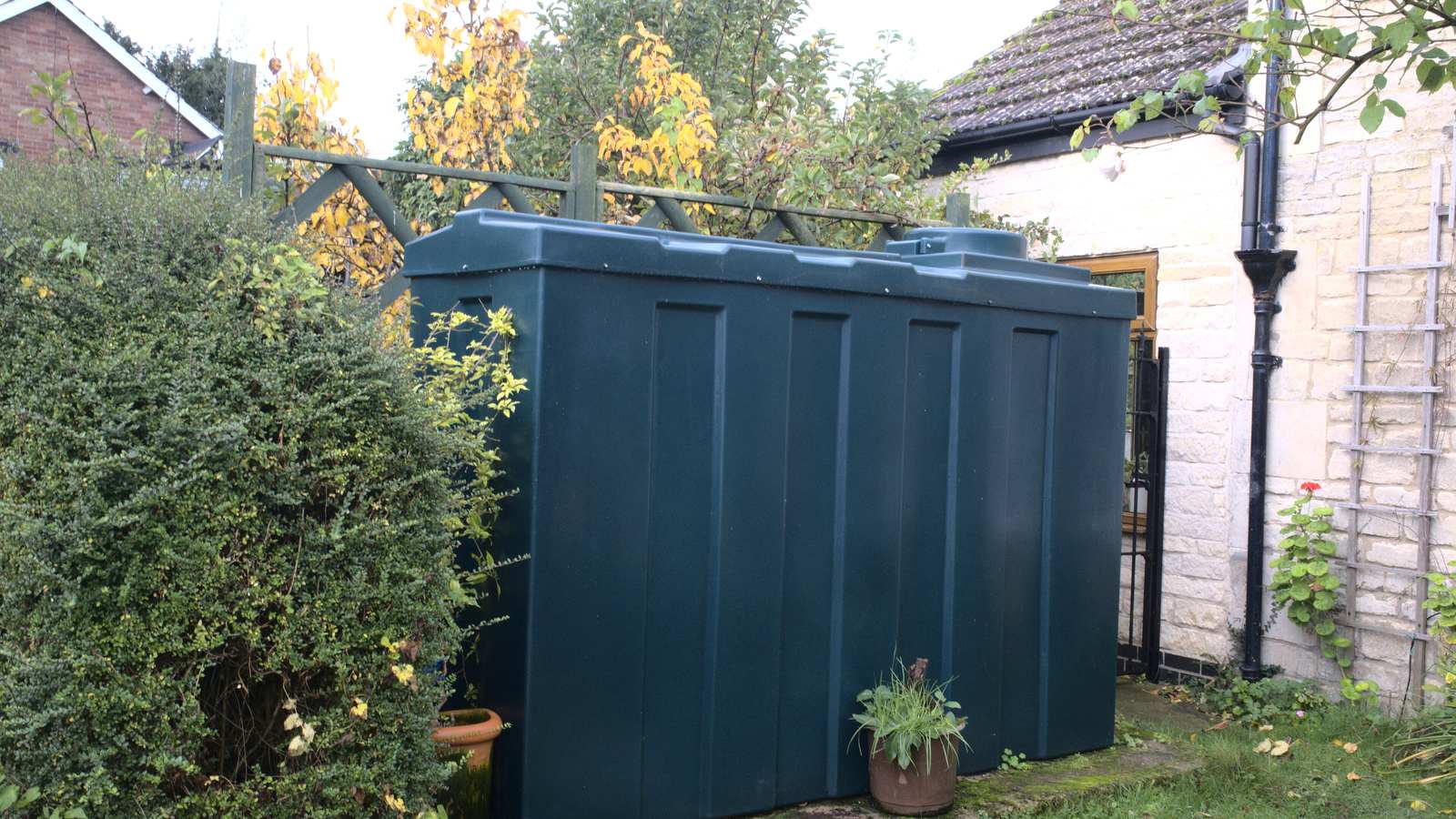
Heating oil prices today, and a year ago
Three trusted measures, three different bases. Whichever you use, the price is more than twice what it was in October 2025.
| Measure | Latest | A year earlier | Change |
|---|---|---|---|
| BoilerJuice UK daily, 1,000 litres, before VAT | 112.34p (14 Oct 2026) | 52.98p (14 Oct 2025) | ×2.12 |
| Same, with 5% VAT (our calculation) | 117.96p | 55.63p | +62.33p |
| DESNZ official, up to 1,000 litres, with VAT | 102.31p (Sep 2026) | 49.26p (Sep 2025) | ×2.08 |
| Consumer Council NI, 900 litres, with VAT | £1,008.32 (14 Oct 2026) | £470.77 (16 Oct 2025) | ×2.14 |
| Consumer Council NI, 500 litres, with VAT | £569.03 (14 Oct 2026) | £267.85 (16 Oct 2025) | ×2.12 |
The Department for Energy Security and Net Zero (DESNZ) records one price a month for standard grade burning oil, the kerosene most UK homes burn, taken on the Monday nearest the 15th. September's 102.31p is the third highest reading since the series began in 1989. Only March and April 2026, at 104.05p and 103.97p, were higher; the 2022 energy crisis peaked at 99.30p. The October figure is due on 29 October.
The daily figures show the price climbing again since the summer. BoilerJuice's average fell to 68.95p before VAT in July, rose through August and passed 100p on 11 September. It has stayed between 108p and 115p since mid-September. In Northern Ireland, where over 60% of households heat with oil, the Consumer Council's daily survey shows 900 litres rising from £963.90 on 8 October to £1,008.32 today.
DESNZ Table 4.1.1, release of 29 September 2026 (deliveries of up to 1,000 litres, 5% VAT included). Consumer Council for Northern Ireland daily price checker and weekly archive (VAT included). BoilerJuice: average of the lowest supplier price in each postcode district, 1,000 litres, excluding VAT, from its public price chart. Ratios and the VAT-inclusive BoilerJuice price are our calculations.
What 500 or 1,000 litres of heating oil costs now
Heating oil is paid in one lump, so a doubling in the price per litre lands on the doormat as a bill of several hundred pounds more.
| Order | Today | A year ago | Extra |
|---|---|---|---|
| 500 litres at the UK daily average (with VAT) | £589.79 | £278.15 | +£311.64 |
| 1,000 litres at the UK daily average (with VAT) | £1,179.57 | £556.29 | +£623.28 |
| 1,000 litres at the official September price | £1,023.06 | £492.56 | +£530.50 |
| 300 litres, Northern Ireland average | £351.55 | £169.80 | +£181.75 |
| 500 litres, Northern Ireland average | £569.03 | £267.85 | +£301.18 |
| 900 litres, Northern Ireland average | £1,008.32 | £470.77 | +£537.55 |
Our calculation: price per litre × litres. UK daily average: BoilerJuice 1,000-litre price plus 5% VAT on 14 October 2026 and 14 October 2025. Official: DESNZ September 2026 and September 2025. Northern Ireland: Consumer Council daily survey of 14 October 2026 and weekly survey of 16 October 2025.
a litre for a 300-litre order in Northern Ireland today, against 112.0p a litre for 900 litres
what the CMA says a typical 500-litre order cost in February and then in March 2026
UK households that rely on heating oil, according to the CMA
when DESNZ publishes the official October price
A 500-litre order at today's UK average would cost about £590, but small orders are usually dearer per litre than the 1,000-litre price the daily average is based on. Northern Ireland's survey shows the effect: 117.2p a litre for 300 litres, 113.8p for 500 and 112.0p for 900. Delivery costs are spread over fewer litres.
Where you live matters too. In its study the CMA found prices are usually lowest in Northern Ireland, where homes using oil are close together, and higher in remote areas, including parts of Scotland, where fewer suppliers compete. When the crisis began, its figures show the average rising from 69p to 113p a litre in Scotland between February and March, against 65p to 103p in England, 64p to 106p in Wales and 57p to 97p in Northern Ireland.
Why heating oil has risen faster than diesel
Kerosene and diesel come from the same part of the barrel. The difference in how they are taxed explains why one has doubled and the other has not.
| Before tax | Feb 2026 | Sep 2026 | Rise |
|---|---|---|---|
| Heating oil (kerosene), pence a litre | 50.92p | 97.43p | +91% |
| Diesel, pence a litre | 56.54p | 87.74p | +55% |
DESNZ Table 4.1.2, typical retail prices excluding VAT and duty, release of 29 September 2026. Percentages are our calculation.
Before tax, a litre of heating oil now costs more than a litre of diesel. At the pump diesel still looks far dearer, at a median of 199.9p on our diesel price page today, because it carries fuel duty of 52.95p a litre and 20% VAT. Kerosene for home heating carries no duty and 5% VAT. So almost everything you pay for heating oil is the fuel itself and its delivery, and when world kerosene prices jump, the bill jumps by nearly the same proportion.
That is what happened this year. The government said in March that kerosene had been "particularly impacted" by the conflict in the Middle East. The CMA concluded that the price rises "largely reflected rising wholesale costs" and that suppliers had not profited materially from the crisis. How tax and wholesale costs make up the price of road fuel is explained in What sets the price on your forecourt.
- February 2026Official price 53.46p a litre with VAT. Northern Ireland: £307.38 for 500 litres on 26 February.
- Sunday 8 March 2026BoilerJuice's daily average peaks at 134.20p before VAT.
- Monday 16 March 2026The Chancellor announces over £50 million of support for low-income households who heat with oil, and the intention to regulate the sector.
- March and April 2026Official monthly price 104.05p and 103.97p, the highest since 1989. The CMA puts the average peak at 123p in April, 92% above February.
- July 2026Prices ease: 69.98p on the official series. On 15 July the CMA publishes its market study and recommends a regulatory regime.
- Friday 28 August 2026The CMA secures compensation for around 1,700 customers whose orders were cancelled.
- September 2026Official price back up to 102.31p. BoilerJuice passes 100p on 11 September.
- Tuesday 13 October 2026The government accepts the CMA's findings and promises to regulate the market for the first time, without a price cap.
- Thursday 29 October 2026 (due)DESNZ publishes the official October price.
What the government has promised, and what it has not
The announcement is about protections for customers, not about the price. Here is the government's answer to each of the CMA's recommendations.
| CMA recommendation | Government answer | What it means for you |
|---|---|---|
| A regulatory regime: suppliers authorised, a register of oil households, priority help for vulnerable customers, a mandatory code with access to independent dispute resolution, enforcement by Ofgem (Utility Regulator in NI) | Agree in principle | The big change. Under the CMA's model, Ofgem would police oil suppliers as it does gas and electricity suppliers. No start date. |
| Interim steps: stronger industry Codes of Conduct and better access to dispute resolution | Agree | The short-term change. The government says it will work with Ofgem, the trade body UKIFDA and the industry on the codes. |
| Review the rules that limit minimum order volumes | Agree | The government notes no regulation sets a minimum; it depends on the meter approved on each tanker. It will check whether rules are applied too strictly. |
| Suppliers to signpost payment plans and minimum orders, with the reason | Agree | Expect clearer information on spreading the cost, once the codes are updated. |
| Use regional data to target help where prices are highest | Agree | Future support may be aimed at remote areas with fewer suppliers. |
| Option: a temporary official price checker for Great Britain | Further work required | No government comparison tool for now; it says commercial sites cover most of Great Britain in normal times. |
The Minister for Energy Consumers, Polly Billington, said the reform would hold suppliers to account and give consumers "confidence that they will get a fair deal". The trigger was what happened in March: the CMA found that around 1,700 customers had orders cancelled when prices jumped, and many paid £150 to £350 more to reorder. Suppliers have agreed to compensate them, and the CMA says eligible customers are contacted directly and do not need to act.
Help for households that heat with oil this winter
None of these schemes is only for oil users, but all of them can be used by households off the gas grid. Rules as published on GOV.UK and mygov.scot on 14 October.
Winter Fuel Payment: £100 to £300
For people born on or before 27 June 1960 who usually live in England, Wales or Northern Ireland. If you live alone you get £200, or £300 if born before 28 September 1946. Most people are paid automatically in November or December 2026. If your income is over £35,000, HMRC takes it back.
Scotland: Pension Age Winter Heating Payment
Replaces the Winter Fuel Payment in Scotland: between £105.55 and £316.70 for people of State Pension age, paid automatically in most cases, with letters from November 2026. The same £35,000 income rule applies.
Warm Home Discount: £150
Taken off your electricity bill, so it works for homes heated by oil. In England and Wales you qualify if, on 23 August 2026, you or your partner got Universal Credit, Housing Benefit, income-related ESA or Pension Credit and your name is on the bill. It is not available in Northern Ireland.
Council help: over £50 million
Announced in March for low-income households on heating oil: £27 million in England through councils' Crisis and Resilience Fund, £17 million in Northern Ireland, £4.6 million in Scotland and £3.8 million in Wales. Ask your local council what it offers.
£9,000 towards a heat pump
A time-limited, higher Boiler Upgrade Scheme grant for homes in England and Wales replacing oil or LPG heating, deducted by the installer. In August, 1,042 of these grants were paid, 32% of the month's total.
1Check whether you need to claim the Winter Fuel Payment
You do not need to claim if you get the State Pension or one of the benefits listed on GOV.UK. Otherwise you can claim by post since 21 September, or by phone from 19 October 2026. The deadline for this winter is 31 March 2027.
2Look out for your Warm Home Discount
The scheme reopens in October 2026 and most eligible households get the discount automatically. In Scotland some households have to apply to their electricity supplier.
3Ask your council before you order
If paying for a delivery would leave you short, contact your local council about the Crisis and Resilience Fund or its local equivalent. The government says vulnerable households facing immediate difficulty should start there.
Winter Fuel Payment and Warm Home Discount: GOV.UK guides, read on 14 October 2026. Pension Age Winter Heating Payment: mygov.scot. Over £50 million of support: HM Treasury and DESNZ, 16 March 2026. Boiler Upgrade Scheme figures: DESNZ, 13 October 2026. Cold Weather Payments are a separate scheme for people on certain benefits when temperatures stay at zero or below for 7 days.
How to compare heating oil prices before you order
There is no official price comparison tool in Great Britain. These checks help you judge whether a quote is fair.
1Compare like with like: with or without VAT
Domestic heating oil carries 5% VAT. A quote of 112p before VAT is 117.6p with it. Ask for the total for your volume, including VAT and any delivery charge.
2Compare at the volume you will actually buy
The price per litre falls as the order grows. In Northern Ireland today 300 litres works out at 117.2p a litre and 900 litres at 112.0p. Check the minimum order and whether smaller deliveries are offered; some suppliers now take 300 litres.
3Get more than one quote
The CMA found most households have a choice of suppliers. Commercial comparison sites cover most of Great Britain; in Northern Ireland the Consumer Council publishes a daily price survey by town.
4Get the price and delivery date in writing
Many of this year's complaints were about orders cancelled after prices rose. In September the CMA wrote to suppliers reminding them that their terms must be fair and transparent, including any clauses that limit their liability for late or failed deliveries.
5Ask about payment plans
Spreading the cost through a supplier's monthly plan or a local buying group can avoid one large bill. Under the changes accepted on 13 October, suppliers will have to signpost these plans more clearly.
More fuel prices on Fuel Radar
Our pages track forecourt prices every hour; these are the ones closest to this story.
Diesel prices today
The national median, the cheapest and dearest forecourts, region by region
What sets the price of fuel
Wholesale costs, tax, supermarkets and motorway services explained
Fuel prices in Northern Ireland
Forecourt prices in the part of the UK most reliant on heating oil
Fuel prices in Scotland
Median and cheapest forecourts across Scotland
UK diesel hits a record on the RAC's figures
Our 28 September report on where the money in a litre of diesel goes
Fuel price questions
Searching by postcode, supermarkets, motorway services and timestamps
Where these figures come from
Official prices from DESNZ and the Consumer Council for Northern Ireland, the daily UK average from BoilerJuice, and the rules from the government, the CMA and the benefit guides. Costs, ratios and the diesel comparison are our calculations.
- Department for Energy Security and Net Zero, Stronger protections for heating oil customers, 13 October 2026 – gov.uk
- Government response to the CMA market study into the retail supply of heating oil for domestic use, 13 October 2026 – gov.uk
- Competition and Markets Authority, heating oil market study (final report 15 July 2026) – gov.uk; UK's heating oil households need stronger protections – gov.uk; CMA secures compensation for heating oil customers, 28 August 2026 – gov.uk; consumer protection case and open letter of 10 September 2026 – gov.uk
- Department for Energy Security and Net Zero, Typical retail prices of petroleum products (Tables 4.1.1 to 4.1.3), release of 29 September 2026 – gov.uk
- Consumer Council for Northern Ireland, home heating oil daily price checker and weekly archive, 14 October 2026 – consumercouncil.org.uk
- BoilerJuice, UK heating oil prices, 1,000-litre daily average excluding VAT, 14 October 2026 – boilerjuice.com
- HM Treasury and DESNZ, Over £50 million to help families struggling with soaring heating oil costs, 16 March 2026 – gov.uk
- Winter Fuel Payment – gov.uk; Warm Home Discount Scheme – gov.uk; Pension Age Winter Heating Payment – mygov.scot
- Diesel median: this site's forecourt snapshot of 14 October 2026 at 10:29 – how we count
Published
By Fuel Radar newsroom
We read the open price feeds published by UK fuel retailers every hour, and follow the official statistics and regulators' reports that explain why the price on the board moves.
Sources: Department for Energy Security and Net Zero, Stronger protections for heating oil customers and Government response to the CMA heating oil market study (both 13 October 2026), CMA heating oil market study (final report 15 July 2026), DESNZ typical retail prices of petroleum products (release of 29 September 2026, Open Government Licence v3.0), the Consumer Council for Northern Ireland price checker and the BoilerJuice daily UK price (14 October 2026). Eligibility rules from GOV.UK and mygov.scot. Tank costs, ratios and the tax comparison with diesel are our own calculations. Photo: Bob Harvey, Geograph, via Wikimedia Commons, CC BY-SA 2.0.