Google Maps adds UK petrol and diesel prices from Fuel Finder as diesel hits 199.52p
Search for "petrol" or "fuel" in Google Maps and, since Thursday 8 October, nearby forecourts show their prices. The figures come from Fuel Finder, the government scheme that obliges every UK petrol station to report a price change within 30 minutes. It arrives in a week when the official weekly diesel price set a record, 199.52p a litre. Here is what the app shows, how to check it against the pump, and what diesel costs today in your region.
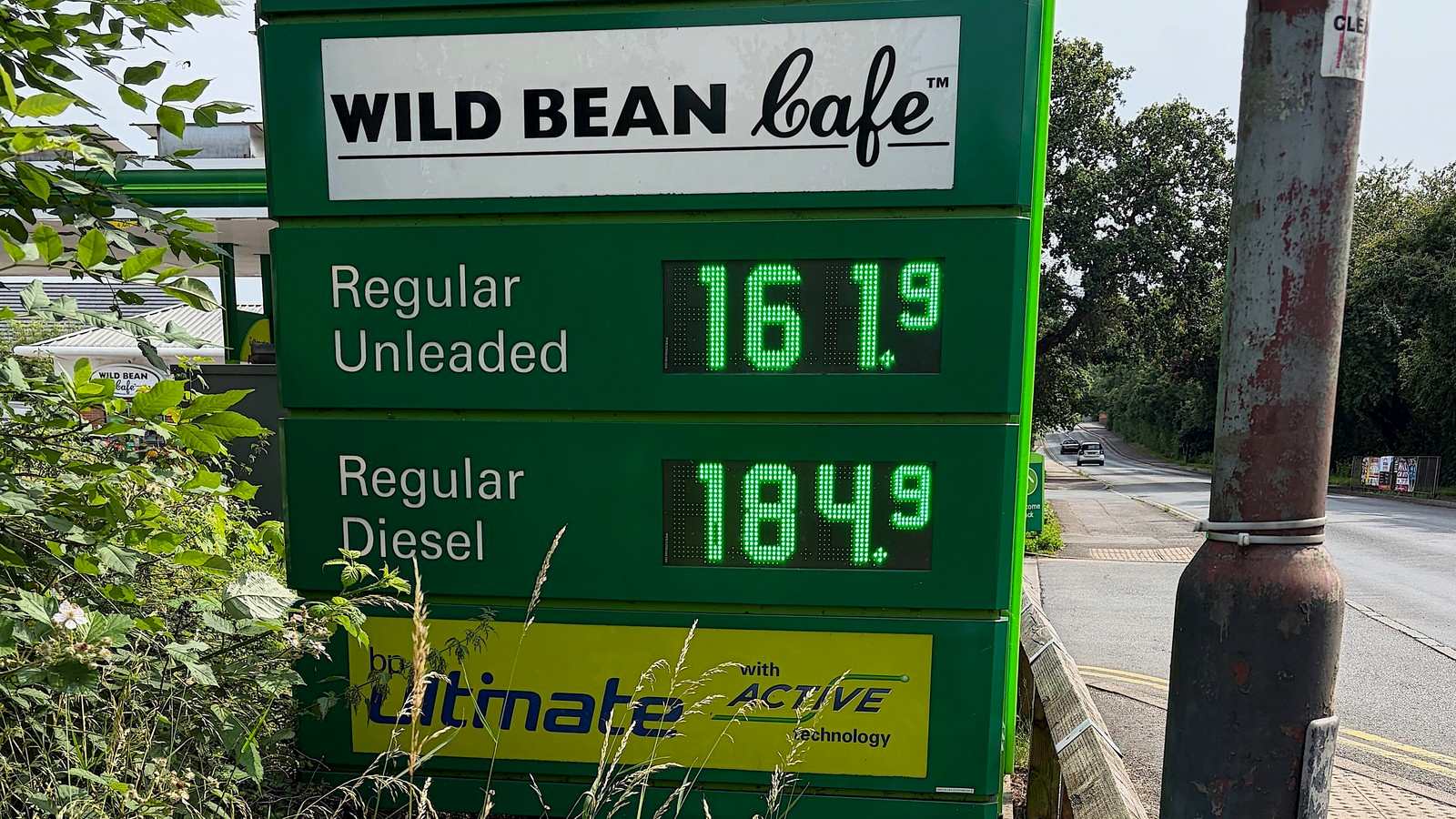
What Google Maps now shows, and what it does not say
Google describes three things, and they work in Google Maps and in Waze. Everything else about the feature is still unconfirmed.
Search "petrol" or "fuel"
Google says typing either word in Maps or Waze brings up the latest prices at stations nearby.
Prices on the map
Petrol and diesel prices appear on the map itself, so you can compare forecourts before choosing one.
Every fuel at one station
Google says a station's listing gathers the prices of all the fuels it sells in one place.
The government and Google announced the launch at one minute past midnight on Thursday 8 October. In its announcement, Google says it worked with the UK government and the UK Waze community, and that the same data now appears in both of its apps. The government already listed Waze among the apps using Fuel Finder data, with Petrol Prices, the AA, Confused.com and RAC Fuel Watch.
Polly Billington, the Minister for Energy Consumers, called it "a gamechanger". The government's own estimate is that a household with a car can save about £40 a year by comparing prices. It does not publish how that figure was worked out. On our own sums, £40 is about twelve 55-litre fill-ups each bought 6p a litre cheaper.
What Google has not said: whether each price carries the time it was last updated, whether you can sort stations by price, and whether the feature works the same in Android Auto and Apple CarPlay. We will add those details when Google confirms them.
Where the prices come from: Fuel Finder, a legal duty since February
Google does not collect the prices itself. They come from a statutory open-data scheme that every UK petrol station must feed.
the date forecourts had to start reporting every price change
to report a new price; changes to facilities or opening hours within 3 days
of fuel sold on UK roads now reflected in Fuel Finder, according to the government on 8 October
of global annual turnover: the maximum fine the CMA can impose for failing to report
Fuel Finder runs under the Motor Fuel Price (Open Data) Regulations 2025 and is operated for the government by VE3 Global Limited. The Competition and Markets Authority recommended it and enforces it. Any business that sells petrol or diesel to the public has to register each forecourt and report its prices: chains, franchises, unmanned sites and garages that sell fuel on the side. Sites that only sell to other businesses, only sell red diesel for farm use, sell fuel in jerry cans or supply HGV depots are exempt.
Prices can be submitted online, through an API, by text message or by phone. The system warns the operator if a new price looks wrong, for example if it is more than 50% away from the last one. A forecourt that persistently reports late or wrongly can get a compliance notice or a fine, and the CMA said it would start prioritising enforcement from 1 May 2026.
Coverage has grown in steps. In March the government said about 90% of petrol stations had signed up; on 8 October it said 99% of fuel sold was reflected. Those two figures measure different things, stations and volume, so a small number of forecourts may still be missing from the map.
How to check your forecourt's price, and report it if it is wrong
The duty to report is on the forecourt, and the government runs a service for drivers to flag a wrong price.
1Search "petrol" or "fuel" in Google Maps or Waze
Look at the prices shown on the map for the stations around you, then open the one you plan to use to see the price of each fuel it sells.
2Compare with your town's median
Open your town from our towns list or your region. If a forecourt is well above the median, the one down the road may be worth the detour; if it is far below, check it is not an old price before you drive there.
3Read the pump, not the app
A forecourt has 30 minutes to report a change, so the board and the pump can be ahead of the map. You pay the price on the pump.
4Note the details if they differ
The government's service asks for the forecourt name and address or postcode, the date and time, what is wrong (price, facilities, opening hours, location, a temporary closure) and where you saw it: sign, pump, app. A photo of the pump or receipt helps but is optional.
5Report it on GOV.UK
Use Report an error in fuel prices or forecourt details. You can report anonymously. Reports may be passed to the operator or to local Trading Standards, and repeated failures can go to the CMA.
Steps 4 and 5 summarise the GOV.UK guidance published on 2 February 2026. Fuel Finder covers forecourts in the UK only.
Diesel and petrol prices today, region by region
The official weekly figure has just set a diesel record. At the forecourts we track, most regions sit on the same 199.9p median.
The government's weekly series, taken each Monday, put diesel at 199.52p on 5 October, 0.30p above its previous high from July 2022. A week earlier it was 197.58p. Diesel has risen 58.06p a litre since 23 February, the last reading before the conflict in the Middle East, and unleaded 43.17p. Petrol is still well short of its 2022 record. The RAC's daily average passed £2 a litre on 2 October, at 200.01p.
Our median is not a third national average: it is the middle price among the forecourts in our feeds. Half of the 2,358 we track charge 199.9p or less for diesel; the cheapest tenth are at 196.9p or below and the dearest tenth at 203.9p or above.
| Region | Forecourts | Diesel median | Cheapest diesel | Unleaded median |
|---|---|---|---|---|
| Northern Ireland | 10 | 192.7p | 187.7p | 166.9p |
| North West | 296 | 199.9p | 188.7p | 173.9p |
| Yorkshire and the Humber | 225 | 199.9p | 188.7p | 173.9p |
| East Midlands | 175 | 199.9p | 188.7p | 174.9p |
| Scotland | 237 | 199.9p | 190.7p | 175.7p |
| West Midlands | 233 | 199.9p | 191.7p | 174.9p |
| North East | 100 | 199.9p | 194.7p | 173.9p |
| Wales | 131 | 199.9p | 195.7p | 174.9p |
| South West | 253 | 201.9p | 188.7p | 175.9p |
| London | 250 | 201.9p | 189.7p | 174.9p |
| East of England | 144 | 201.9p | 191.7p | 175.9p |
| South East | 285 | 201.9p | 193.9p | 175.9p |
Official figures from the DESNZ weekly road fuel prices CSV, release of 6 October 2026; RAC figures from its statement of 2 October 2026. Regional medians of this site, 8 October 2026 at 18:30.
What comparing saves inside one town
The government's £40 a year comes from shopping around. Inside a single city today, the gap between the cheapest and the dearest diesel is worth as much as £6.16 on a 55-litre tank.
| Town | Forecourts | Median | Cheapest to dearest | Gap on 55 litres |
|---|---|---|---|---|
| Glasgow | 34 | 201.9p | 193.7p to 204.9p | £6.16 |
| Manchester | 28 | 199.9p | 192.9p to 202.9p | £5.50 |
| Birmingham | 29 | 199.9p | 195.9p to 203.9p | £4.40 |
| Cardiff | 13 | 199.9p | 196.7p to 202.9p | £3.41 |
| Newcastle upon Tyne | 11 | 199.9p | 195.7p to 201.9p | £3.41 |
| Aberdeen | 10 | 202.9p | 199.7p to 205.9p | £3.41 |
| Bristol | 19 | 199.9p | 196.9p to 202.9p | £3.30 |
| Sheffield | 20 | 199.9p | 195.9p to 201.9p | £3.30 |
| Southampton | 13 | 200.9p | 196.9p to 201.9p | £2.75 |
Glasgow has the widest spread of the big cities in our feeds: 11.2p between 193.7p on Duke Street and 204.9p, and a median 2p above Scotland's. Manchester's cheapest diesel, 192.9p at Harpurhey Shopping Centre, is 7p below its median. Leeds (197.9p), Liverpool (197.9p), Edinburgh (198.9p) and Nottingham (198.9p) have medians below the national 199.9p.
By brand, Asda and Morrisons sit on the national median for diesel, while Esso is 2p above it and BP 3p above. Every one of the ten cheapest diesel prices we track today is at an Asda forecourt; the full list is on the cheapest forecourts page.
Our calculation: (dearest − cheapest price in the town) × 55 litres, from this site's town pages on 8 October 2026 at 18:30. Towns with at least ten forecourts in our feeds.
From a voluntary scheme to prices on Google Maps
Eight months separate the legal duty to report prices from their arrival on Google Maps.
- Monday 2 February 2026Fuel Finder reporting becomes compulsory: every UK forecourt must report a price change within 30 minutes. The government's error-reporting service for drivers opens the same day.
- Monday 23 February 2026Official weekly price before the conflict: diesel 141.46p, unleaded 131.71p.
- Tuesday 31 March 2026The government publishes its Fuel Finder factsheet for drivers: about 90% of stations signed up.
- Friday 1 May 2026The CMA's interim voluntary open-data scheme closes and the CMA starts prioritising enforcement of Fuel Finder.
- Friday 2 October 2026RAC daily average diesel passes £2 a litre for the first time: 200.01p.
- Tuesday 6 October 2026DESNZ publishes the official price for the week of 5 October: diesel 199.52p, above the 199.22p record of July 2022.
- Thursday 8 October 2026Fuel Finder prices go live on Google Maps and Waze. The government says the scheme now covers 99% of fuel sold on UK roads.
- Tuesday 13 October 2026 (due)Next official weekly price, for the week starting 12 October.
Keep checking the price
These pages update every hour from the retailers' feeds.
Diesel prices today
National median, cheapest and dearest tenth, and every region on a map
Unleaded prices today
The same figures for petrol, with the cheapest forecourts first
Fuel prices in your town
Every forecourt in each town, sorted by price with the retailer's update time
Supermarket fuel prices
Asda and Morrisons forecourts ranked by price
Where is the cheapest petrol near me?
Answers on searching by postcode, supermarkets, motorway services and timestamps
UK diesel hits a record on the RAC's figures
Our 28 September report: where the money in a litre goes and what a fill-up costs
Where these facts come from
The launch from the government and Google, the rules from the Fuel Finder guidance, official prices from DESNZ, the daily average from the RAC, and forecourt prices from our own snapshot.
- Department for Energy Security and Net Zero and HM Treasury, "Drivers set to save as petrol prices launch on Google Maps", 8 October 2026 – gov.uk
- Google, "This winter, use Google Maps and Waze to find the best fuel prices in the UK", Sarah-Jayne Williams, 8 October 2026 – blog.google
- Department for Energy Security and Net Zero, Fuel Finder guidance for forecourts: overview, reporting your fuel prices and if you fail to report; Report an error in fuel prices or forecourt details, 2 February 2026; Fuel Finder for drivers: factsheet, 31 March 2026
- Competition and Markets Authority, Access fuel price data (operator of Fuel Finder and enforcement from 1 May 2026) – gov.uk
- Department for Energy Security and Net Zero, Weekly road fuel prices, CSV 2018 to 2026, release of 6 October 2026 covering the week commencing Monday 5 October – gov.uk
- RAC, "Diesel tops £2 a litre for first time ever", 2 October 2026 – media.rac.co.uk
- Forecourt prices: retailers' open price feeds read by this site every hour, snapshot of 8 October 2026 at 18:30, 2,358 forecourts with a diesel price – how we count
Published
By Fuel Radar newsroom
We read the open price feeds published by UK fuel retailers every hour, and follow the official statistics and regulators' reports that explain why the price on the board moves.
Sources: Department for Energy Security and Net Zero and HM Treasury, press release of 8 October 2026, Google's announcement of 8 October 2026, the government's Fuel Finder guidance and error-reporting service, DESNZ weekly road fuel prices (release of 6 October 2026, Open Government Licence v3.0) and the RAC statement of 2 October 2026. Forecourt prices: medians published on this site from retailers' open price feeds, snapshot of 8 October 2026 at 18:30. Fill-up gaps and the £40 comparison are our own calculations. Photo: Robin Stott, Wikimedia Commons, CC BY-SA 2.0. How the medians are worked out: How we count.